[ad_1]
What we’ve learned from today’s documentspublished at 14:37 BST
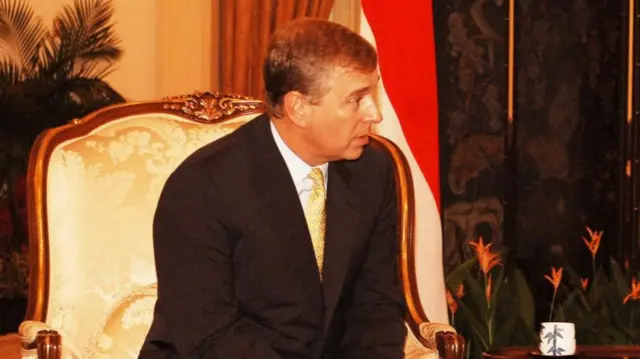 Image source, PA Media
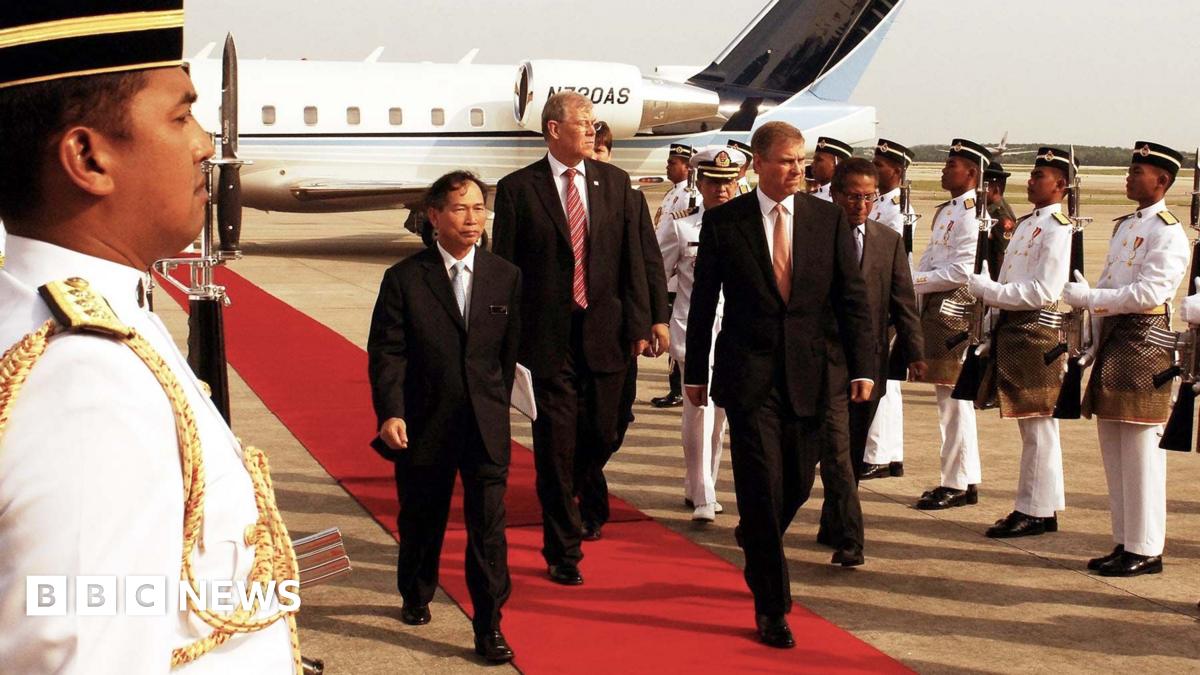
Earlier today, the government released documents about the appointment of Andrew Mountbatten-Windsor as the UK’s trade envoy in 2001. Here’s an overview of what we’ve learned.
Queen Elizabeth wanted Andrew in the role: It was the “wish” of Elizabeth II, the late queen, for her son to take over as “trade envoy”, according to a memo from David Wright, chief executive of British Trade International.
Wright’s memo followed a “wide-ranging discussion” with the Queen’s private secretary, and was written to the then-foreign secretary, Robin Cook. The memo said the Queen was “very keen” for Mountbatten-Windsor to take on a “prominent role in the promotion of national interests”.
A preference for visiting ‘the more sophisticated countries’: Mountbatten-Windsor had a preference for visiting “the more sophisticated countries”, and “should not be offered golfing functions abroad”, according to a letter dated 25 January 2000 and written by British diplomat Kathryn Colvin.
Ballet rather than theatre: Colvin’s letter – written after a meeting with Andrew’s then-private secretary Captain Neil Blair – added that Andrew was “particularly good on high-tech matters, trade, youth (including primary schools and outward bound projects), cultural events, with a preference for ballet rather than theatre, the Commonwealth and military and foreign affairs”.
‘No evidence’ of formal vetting process: As the files were released, trade minister Chris Bryant says no evidence was found of any “formal due diligence or vetting process” for the appointment, or that such a process was considered. He says “this is understandable since this new appointment was a continuation of the Royal Family’s involvement”. The Duke of Kent held a similar role before Andrew.
[ad_2]
Source link